
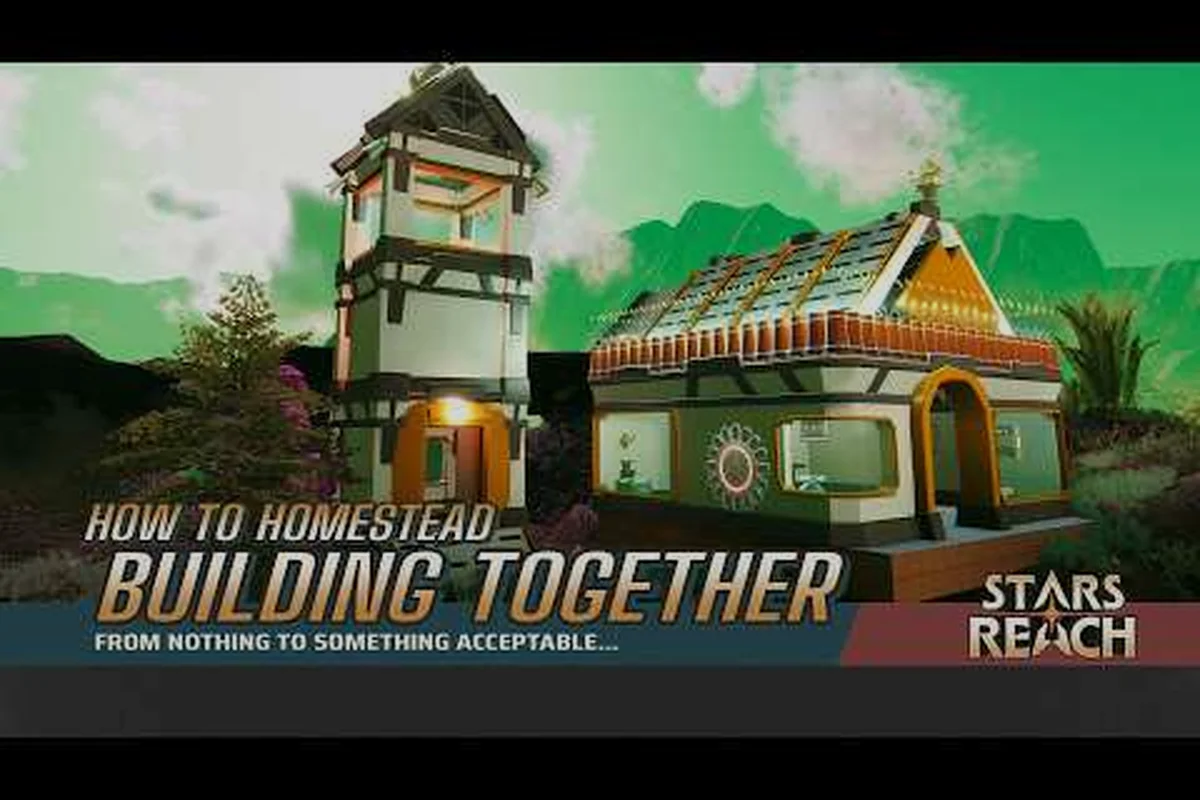
Stars Reach planet ownership turns the classic MMO housing system on its head by letting you claim a patch of an actual living world — not a instanced plot — where water flows downhill, temperatures shift with the seasons, and every cubic meter of terrain carries real material properties. This guide walks you through staking your first claim, customizing a home that fits the environment, and defending your settlement against the galaxy's unpredictable threats. Because the game simulates entire planets rather than static zones, the choices you make at claim time ripple through everything you build afterward, so understanding the mechanics before you place your first foundation saves you hours of rework.
Understanding Planet Ownership in Stars Reach
The core promise of Stars Reach planet ownership is that your claim exists inside a single shared universe where the world reacts to your presence. According to the official Stars Reach website, players can claim land and build settlements that transform untamed worlds into thriving civilizations, working together across a shared galaxy. This isn't a instanced housing pocket — your neighbors can see your base, weather affects your structures, and the terrain itself can shift beneath you.
What makes this system genuinely different from traditional MMO housing is the living galaxy simulation. The developer team at Playable Worlds has stated that they track temperature, humidity, and material composition for every cubic meter of every planet, and water actually flows downhill and puddles, freezing overnight or during winter seasons. That means your claim isn't just a flat square of land — it's a slice of an ecosystem with its own microclimate, resource distribution, and environmental challenges.
How Land Claims Work
When you stake a claim, you're essentially registering ownership of a defined area with the game's planetary simulation. The system tracks who built what, who has permission to modify structures, and how the environment interacts with your constructions. Community reports suggest that claims are tied to your character's progression, with larger and more permanent claims unlocked as you advance through the game's building systems.
The key distinction between Stars Reach planet ownership and other games is that your claim is part of the persistent world. If you build a dam across a river, the water upstream rises. If you mine out a hillside, the terrain actually changes. This creates both opportunity and risk — you can reshape the land to your advantage, but you also need to account for how the environment will respond to your modifications.
What You Can Own
Your claim isn't limited to a single building footprint. Based on the official preview materials, you can claim land for homesteading purposes, which includes space for housing, resource extraction, farming, and defensive structures. The game's marketing emphasizes that you can do everything described on the ground out in space too, meaning asteroid bases and space stations are viable alternatives to planetary settlements.
Your ownership umbrella in Star's Reach typically covers the plot itself, the foundation, and any structural frame you snap onto it—but not the raw ore veins or trees still rooted in the ground. Before you build on a planet, claim the territory via your claim beacon, then use your multitool to harvest and stockpile silicon and carbon. This distinction matters because unclaimed resources remain fair game for other players, so securing your material supply early prevents mid-construction raids.
-
Building footprint — the physical space your structures occupy
-
Resource rights — access to minerals, water, and organic materials on your claim
-
Structural permissions — who can build, modify, or demolish on your land
-
Defensive infrastructure — walls, turrets, and other protective measures
-
Environmental modifications — terraforming, irrigation, and climate control
How to Build on a Planet
The process of building on a planet in Stars Reach starts with understanding the terrain you're claiming. Because the game simulates real material properties, you can't just plop down a foundation anywhere — you need to consider soil stability, water drainage, and access to resources. The construction guide that the community has developed emphasizes scouting multiple locations before committing to a claim.
Your first step is finding a suitable location. Look for flat terrain near water and mineral deposits, but also consider defensive positioning. A valley floor might have great resource access, but it's also vulnerable to flooding and attack. A ridge line offers better sightlines for defense but requires more terraforming work to create buildable platforms.
Site Selection and Preparation
Before you place your first foundation, you should evaluate the environmental factors that will affect your build. Community testing has shown that building in flood plains without proper drainage leads to structural damage during rainy seasons, while building on steep slopes requires significant terracing work. The game's simulation means that water will find the path of least resistance — if your foundation blocks that path, you'll get pooling and potential structural issues.
The preparation phase involves clearing vegetation, leveling terrain, and establishing your claim boundary. This groundwork determines how smoothly the rest of your construction goes, so it's worth investing time here. Players who rush this phase often find themselves rebuilding after the first weather event or resource shortage.
Choosing Foundation Materials for Your Site
Once your site is prepared, you'll lay down your foundation system and structural frame. The game's building system supports multiple material types, each with different properties. Stone foundations offer better stability but take longer to construct, while wooden frames go up quickly but are more vulnerable to fire and decay. Your choice depends on your playstyle and the threats you expect to face.
A typical starter base follows this progression: claim the plot with a Territory Module on your Multi-Tool, place the Base Computer to anchor ownership, then snap down a Refinery, Constructor, and Storage Container in that order. This sequence matters because the Refinery unlocks early fuel crafting for your jetpack, while the Constructor produces the Reinforced Plates needed to build the Level 2 Workbench, which gates access to mid-tier weapons and armor — skipping straight to walls or decorations leaves you resource-starved before the first Sentinel patrol scans your claim.
-
Survey the terrain and mark your claim boundaries
-
Clear and level the building area
-
Lay foundations using locally available materials
-
Frame the structure with walls and roof supports
-
Install utilities — power, water, and climate control
-
Furnish and customize the interior to your needs
House Customization Options
Stars Reach house customization goes far beyond picking wallpaper colors. The game's material simulation means that the substances you build with affect everything from insulation to structural integrity. A house built from local stone will handle temperature swings differently than one built from imported metals, and the building tips that experienced players share reflect this depth.
Your customization options break down into several categories, each with its own considerations. The structural customization determines your building's shape, size, and layout. The material customization affects performance characteristics. And the aesthetic customization lets you express your personal style while potentially providing functional benefits.
Structural Customization
The building system supports modular construction, allowing you to expand your home as your needs grow. You can start with a simple one-room shelter and gradually add wings, second stories, and specialized rooms. The key constraint is your claim size — you can only build within your claimed area, so plan your expansion carefully.
Community builders recommend starting with a core module that covers your basic needs — sleeping quarters, storage, and a crafting station — then expanding outward as you gather more resources. This approach lets you establish a functional base quickly while leaving room for growth.
Material Choices and Their Impact
Different materials aren't just about looks—each one carries distinct stats that directly impact your Stars Reach settlement defense and build strategy. For example, while basic wood is cheap and quick to place, it offers low durability against raid events, whereas stone-tier blocks require more mining time but provide significantly higher HP per structure, making them ideal for perimeter walls. The material comparison below breaks down these trade-offs across cost, weight, and resistance, so you can prioritize whether you're optimizing for early-game speed or late-game protection when claiming planet ownership and expanding your base footprint.
| Material | Insulation | Durability | Fire Risk | Availability |
|---|---|---|---|---|
| Wood | Moderate | Low | High | Abundant |
| Stone | High | High | Low | Common |
| Metal | Low | Very High | Low | Rare |
| Composite | High | High | Medium | Crafted |
The material you choose affects not just how your house looks, but how it performs. Stone buildings maintain more stable interior temperatures, reducing your heating and cooling costs. Metal structures resist damage but conduct heat, making them uncomfortable in extreme climates without proper insulation.
Essential Building Tips for New Settlers
Stars Reach building for beginners involves learning the game's unique simulation systems before you can build efficiently. The most important building tips focus on working with the environment rather than against it. Players who try to impose their designs on the terrain often struggle, while those who adapt their plans to the landscape build faster and more sustainably.
One of the first lessons new builders learn is that terrain matters more than you think. Building on a slope requires terracing, which adds construction time. Building in a flood plain risks water damage. Building too close to a cliff edge risks collapse. The game's simulation punishes poor site selection, so take the time to scout properly.
Resource Management Strategies
Efficient building requires efficient resource gathering. The game tracks material properties for every cubic meter of terrain, which means the resources you extract from your claim have specific characteristics. Ore from one vein might be purer than ore from another, affecting the quality of your crafted materials.
Here's a quick reference for resource planning: before you claim a planet in Stars Reach, audit your cargo hold for the three essentials—raw ore for the Fabricator, power cells for your Life Support module, and spare repair kits for your landing thrusters. A typical early claim consumes roughly 200 units of ore just for the foundation pad, so arriving short means either a costly return trip to a trade hub or an unprotected settlement vulnerable to raiders during the 24-hour build window.
| Resource | Primary Use | Best Sources | Processing Required |
|---|---|---|---|
| Wood | Framing, fuel | Forested areas | Minimal |
| Stone | Foundations, walls | Rocky terrain | Moderate |
| Iron | Tools, structural supports | Mineral veins | High |
| Water | Farming, cooling | Rivers, lakes | Minimal |
Efficient Construction Techniques
Experienced builders develop efficient construction techniques that minimize waste and speed up the building process. One common approach is to pre-fabricate components at a central crafting station, then assemble them on site. This reduces the time spent hauling materials and lets you standardize your building process.
Another technique involves phased construction — building a functional core first, then expanding outward. This approach ensures you have a working base even if you run out of materials or get interrupted by environmental events. Players who try to build their dream home all at once often find themselves stuck with an unfinished structure when resources run low.
Construction Guide: From Claim to Complete Base
This construction guide walks you through the complete process of establishing a settlement, from your initial claim to a fully operational base. The process involves several distinct phases, each with its own challenges and requirements. Understanding the full picture before you start helps you make better decisions at each step.
The construction guide below assumes you're starting fresh on a new planet with minimal resources, so the early timeline prioritizes a single Refiner and a Core Extractor over cosmetic house customization—functional survival comes first. Adjust the timeline based on your experience level and the resources available on your chosen world; a planet rich in Thorium can cut your power-grid setup time by roughly 30%, while a barren moon forces you to rely on Solar Panels and battery banks, adding several in-game days to the build. Veterans who skip the initial Claim Beacon upgrade often find themselves rebuilding after a settlement defense wave, so factor that protection cost into your resource math from day one.
Phase One: Claim and Survey
Your first task is establishing your claim and surveying the surrounding area. This phase takes about an hour of gameplay and involves: flying to a candidate planet via your ship's star map, scanning the surface for a flat build zone with accessible resource nodes, and using your multitool's terrain manipulator to clear debris. Prioritize plots near copper and iron deposits, since these ores feed your refiner for the alloy plates needed in the Foundation and Wall blueprints. Skipping this survey often forces players to relocate mid-build, wasting the 500 Credits spent on the initial claim deed.
-
Scouting multiple locations to find the best site
-
Claiming your chosen area
-
Mapping local resources and hazards
-
Planning your initial build layout
The survey phase is critical because it determines everything that follows. Players who skip this step often discover too late that their chosen site has poor resource access or is vulnerable to environmental threats. A thorough scan should verify proximity to at least one Ore and one Coal node, as hauling these resources across long distances will cripple your early build efficiency. Additionally, check the terrain for natural choke points and flat ground; building a Spawn Beacon and your initial Foundation on uneven terrain wastes precious time and materials. This pre-build reconnaissance directly impacts your Planetary Shield Generator placement, as a poorly positioned shield leaves your base exposed to meteor strikes and hostile creature raids, forcing a costly relocation that sets your entire stars reach planet ownership progress back significantly.
Phase Two: Basic Shelter
Once your claim is established, you need to build a basic shelter to protect yourself from the elements and local wildlife. This phase typically takes 2-3 hours and produces a simple but functional structure: a wooden box with a door, a crafting bench, and a bed. Prioritize placing your crafting bench first, as it unlocks the stone axe and hammer needed to gather materials faster. For your first night, a 4x4 foundation with walls two blocks high is sufficient to keep out predators, but you'll want to expand to a 6x6 layout with a roof overhang before you start adding storage containers and a smelter.
| Building Component | Materials Needed | Construction Time | Purpose |
|---|---|---|---|
| Foundation | 50 stone | 30 minutes | Structural base |
| Walls | 80 wood | 45 minutes | Enclosure |
| Roof | 40 wood | 30 minutes | Weather protection |
| Door | 10 wood | 15 minutes | Access control |
Phase Three: Expansion and Defense
With your basic shelter complete, you can focus on expanding your base and adding defensive measures. This phase takes several hours and involves building workshops, storage facilities, and defensive structures. The settlement defense considerations become more important as your base grows and attracts attention.
Settlement Defense Strategies
Settlement defense in Stars Reach requires understanding both environmental threats and potential player conflicts. The game's living galaxy means that threats can come from multiple directions — hostile wildlife, environmental hazards, and potentially other players. Your defense strategy needs to account for all of these.
The settlement defense system integrates with the building mechanics, allowing you to construct walls, barriers, and automated defenses. The effectiveness of your defenses depends on both their design and the materials used. A stone wall provides better protection than a wooden one, but takes longer to build and requires more resources. A stone wall provides better protection than a wooden one, but takes longer to build and requires more resources, so weighing the trade-off between build time and defensive strength is key when planning your layout—for a full breakdown of every structure's cost and durability, see our Stars Reach Buildings List.
Environmental Threats
The living galaxy simulation means that environmental threats are a constant concern. Weather events can damage structures, while geological activity can reshape the terrain around your base. Players report that building in geologically active areas requires regular maintenance to keep structures stable.
Here's a breakdown of common environmental threats: hostile fauna that can damage or destroy your structures, extreme weather events like meteor showers and toxic storms that wear down building integrity, and resource depletion that forces you to relocate or expand your settlement. Each threat type requires a different defensive approach—prioritize reinforced walls and automated turrets against wildlife, while investing in weather-resistant materials and backup power generators to weather environmental hazards. Understanding these threats early is crucial for efficient stars reach settlement defense planning.
| Threat | Damage Type | Prevention | Repair Cost |
|---|---|---|---|
| Flooding | Water damage | Proper drainage | Moderate |
| Fire | Structural damage | Fire-resistant materials | High |
| Erosion | Foundation damage | Retaining walls | Low |
| Temperature extremes | Material stress | Insulation | Moderate |
Player Threats and PvP Considerations
While Stars Reach emphasizes cooperation, the shared universe means that conflict is possible. Settlement defense against player attacks requires a different approach than defending against environmental threats. You need to consider sightlines, chokepoints, and the durability of your defensive structures.
Community reports suggest that most player conflicts happen over resource disputes rather than random aggression. Building in less contested areas reduces your risk, but also limits your access to valuable resources. The trade-off between safety and opportunity is a central decision in settlement placement.
Frequently Asked Questions
What is Stars Reach planet ownership?
Stars Reach planet ownership lets you claim a patch of an alien world in a persistent, shared universe. Your claim exists in the game's living galaxy simulation, where water flows, weather changes, and terrain responds to your actions. You can build homesteads, extract resources, and create settlements that other players can see and interact with.
How do I build on a planet in Stars Reach?
To build on a planet, you first need to claim land, then survey the terrain for resources and hazards. Clear and level your building area, lay foundations using local materials, and frame your structure. The game's material simulation means your building choices affect insulation, durability, and fire resistance.
What customization options are available for houses?
Stars Reach house customization includes structural modifications, material choices, and aesthetic options. You can expand your home with modular construction, choose materials that affect performance characteristics, and customize the interior layout. The game's simulation means your material choices have real gameplay implications beyond appearance.
How do I defend my settlement?
Settlement defense involves building walls, barriers, and automated defenses while accounting for environmental threats like flooding and fire. You also need to consider potential player conflicts, especially around resource disputes. Building in less contested areas reduces risk but may limit resource access.
Is building in Stars Reach beginner-friendly?
Stars Reach building for beginners requires learning the game's simulation systems before building efficiently. The key is working with the environment rather than against it — scout locations carefully, start with a basic shelter, and expand gradually. The game's depth rewards patience and planning over rushing to build large structures quickly.