
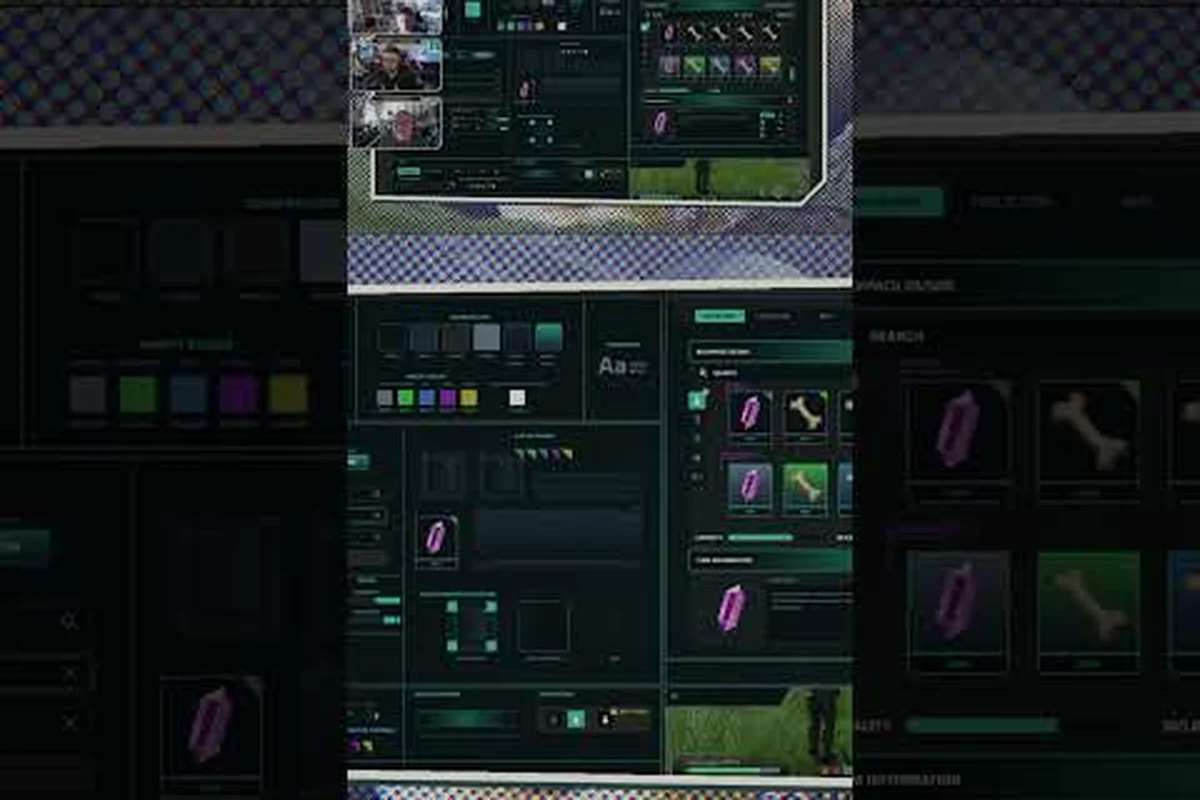
Stars Reach crafting isn't a side activity you check occasionally between combat runs — it's the backbone of the entire shared galaxy. The official site confirms that the best gear in Stars Reach is crafted, not dropped, which flips the typical MMO progression loop on its head. Instead of farming bosses for loot tables, you'll mine ore, refine it into alloys, and assemble components into weapons, tools, ships, medicine, and food that other players genuinely need. Because every item decays and breaks over time, the demand for crafted goods never stops, which means your skills as a weaponsmith or woodworker directly shape the economy around you. Understanding how this system works before you invest hours into a profession will save you from wasted effort and position you as a valuable contributor to any settlement.
How Manufactured Goods Move From Mine to Market
The crafting pipeline in Stars Reach follows a logical progression that mirrors real-world manufacturing, and each stage feeds into the next. According to the official Stars Reach crafting overview, the full chain spans raw resource gathering, smelting, component manufacture, and final assembly of everything from handheld tools to starship hulls. You can't skip ahead to endgame gear without first mastering the intermediate steps, because each tier of equipment demands increasingly refined materials and specialized knowledge.
The chain breaks down into four distinct phases that every crafter needs to internalize: harvesting raw ore at mineral nodes, smelting it into usable ingots at a forge, shaping those ingots via specialized stars reach recipes, and finally assembling components into finished gear. This progression isn't just linear—each step feeds the next, and skipping the metallurgy refinement stage, for example, leaves you with brittle materials that tank your stars reach crafting xp gains.
-
Raw gathering — Miners extract ore, woodcutters harvest timber, and botanists collect plant fibers. These unprocessed materials have limited use on their own but form the foundation of everything else.
-
Smelting and refinement — Furnaces convert raw ore into ingots, while kilns turn clay into bricks. This stage often requires specific fuel types and temperature management, which adds a layer of skill beyond simply clicking a recipe.
-
Component manufacture — Refined materials become mechanical parts, electrical circuits, and structural frames. These components are the building blocks for final products and often require their own dedicated crafting stations.
-
Final assembly — The last step combines multiple components into a finished item. A blaster rifle, for example, needs a barrel assembly, a power cell, a grip frame, and a targeting module before it becomes usable.
| Crafting Stage | Primary Input | Output | Typical Station |
|---|---|---|---|
| Raw Gathering | Ore, wood, plants | Unrefined materials | Mining laser, axe, sickle |
| Smelting | Raw ore, fuel | Ingots, glass, bricks | Furnace, kiln |
| Component Crafting | Ingots, chemicals | Gears, circuits, frames | Workbench, lathe |
| Final Assembly | Components, alloys | Weapons, tools, ships | Assembly table, shipyard |
Because each stage depends on the previous one, you'll quickly discover that specialization beats generalization when it comes to producing high-quality goods. A player who focuses exclusively on smelting can produce superior alloys that command premium prices, while a jack-of-all-trades crafter might struggle to reach the same quality threshold across multiple disciplines.
How the Crafting Economy Creates Interdependence
The genius of the Stars Reach crafting design is that it forces players to rely on each other. The official tour page explains that every way to play outputs either goods or services other people need — warriors need weapons that weaponsmiths make, and weaponsmiths can't craft without resources miners find. This creates a natural ecosystem where no single player can dominate every role, which keeps the player-driven economy vibrant and constantly in motion.
This interdependence means your crafting choices have ripple effects across the entire server. When you decide to become a weaponsmith, you're not just choosing a personal playstyle — you're committing to a role that supports combat-focused players, who in turn protect miners and gatherers from hostile creatures. The system rewards cooperation because crafted goods are always in demand, and the decay mechanic ensures that demand never fully saturates.
Mastering the Stars Reach Weaponsmith Profession
The weaponsmith profession is arguably the most combat-relevant crafting path in Stars Reach, because every fighter in the galaxy needs reliable arms. What makes this profession particularly engaging is the quality variance system, where the same recipe can produce items ranging from serviceable to exceptional depending on your skill level, the quality of your materials, and your crafting technique.
Weaponsmiths must track four distinct weapon families—blades, blunt instruments, polearms, and ranged weapons—each with its own material thresholds and component layouts. A sword, for instance, demands a high-quality metal blade blank from metallurgy, a grip from woodworking, and a pommel that ties the durability stats together, while a bow shifts the balance toward tensile wood and sinew. This means a single crafting session often pulls from multiple skill trees, so planning your stars reach crafting xp gains across disciplines matters as much as the final weapon’s stats.
-
Blasters — Energy weapons that need focused crystals, power regulators, and heat sinks. These demand metallurgy skills for the housing and electrical knowledge for the internals.
-
Melee weapons — Swords, axes, and spears that prioritize blade alloys and handle materials. The balance between cutting edge and structural integrity matters more than raw material quality.
-
Thrown weapons — Throwing knives and axes that require precise weight distribution. These are lighter on materials but demand higher component quality to maintain accuracy.
-
Heavy weapons — Turrets and mounted guns that consume substantial resources but offer massive combat utility for base defense.
| Weapon Type | Key Materials | Primary Components | Skill Focus |
|---|---|---|---|
| Blasters | Copper, crystals, polymers | Power cell, barrel, grip | Metallurgy + Electronics |
| Melee | Iron, carbon, leather | Blade, hilt, pommel | Metallurgy + Woodworking |
| Thrown | Steel, tungsten | Head, shaft, fletching | Metallurgy + Precision |
| Heavy Turrets | Titanium, circuits, ceramics | Frame, cooling, ammo feed | Metallurgy + Engineering |
The weaponsmith path becomes especially valuable during faction warfare and planetary defense events, when demand for replacement weapons spikes dramatically. Players who establish themselves as reliable weaponsmiths often build lasting reputations that translate into steady income and political influence within their settlements.
Weaponsmith Recipe Progression and Quality Tiers
Your journey as a weaponsmith starts with basic iron daggers and progresses through increasingly complex recipes as you unlock new schematics. The recipe discovery system rewards experimentation — combining different materials and components can reveal hidden variants that aren't listed in any standard recipe book. Community reports suggest that some of the best weapons in the game were discovered through this experimentation process rather than through conventional progression.
Quality tiers follow a color-coded system that players quickly learn to recognize, with each tier dictating not just the visual flair of the weapon but the base stats and the type of materials required for the recipe. In Stars Reach crafting, the jump from a green (Common) to a blue (Uncommon) weapon typically demands a shift from basic ores like Copper to refined alloys, which directly impacts your Metallurgy skill progression and the XP yield per craft.
-
Common (Gray) — Basic items with minimal stat bonuses, suitable for early game or emergency replacements.
-
Uncommon (Green) — Slightly improved stats and durability, representing the baseline for mid-tier content.
-
Rare (Blue) — Significantly better performance, often requiring refined alloys and higher crafting skill.
-
Epic (Purple) — Top-tier gear that demands exceptional materials and near-maximum crafting skill.
-
Legendary (Orange) — The pinnacle of crafting, requiring rare resources and perfect execution. These items become famous within their servers.
Stars Reach Woodworking: More Than Just Furniture
While weaponsmithing gets most of the attention, the woodworking profession plays an equally vital role in the Stars Reach economy. Woodworkers produce everything from structural building components to tool handles, shield frames, and even ship interior fittings. The official crafting overview emphasizes that the full chain includes final assembly of tools, weapons, ships, medicine, and food — and woodworking feeds into nearly all of these categories.
Woodworkers start by harvesting timber from various tree species, each with distinct properties. Ironwood provides superior durability for structural applications, while flexwood offers elasticity that makes it ideal for bow limbs and shock-absorbing components. Resin-rich woods can be processed into adhesives and sealants, creating a secondary product line that other crafters depend on.
The profession branches into several specializations, with each one tied to a distinct resource loop that determines your crafting xp efficiency. Woodworking focuses on lumber from forestry nodes, while metallurgy demands ore smelting and alloy recipes, and weaponsmithing sits at the intersection, requiring both refined metal and treated wood for weapon components. Choosing a specialization early matters because stars reach crafting xp gains are heavily skewed toward your chosen branch's recipes, meaning a dedicated woodworker will level faster than a jack-of-all-trades attempting every profession simultaneously.
-
Structural carpentry — Produces beams, planks, and panels used in building construction. High-quality structural components increase building durability and resistance to environmental damage.
-
Tool crafting — Creates handles, shafts, and grips for mining tools, farming implements, and melee weapons. A well-crafted handle can significantly improve a tool's efficiency.
-
Shield and armor framing — Combines wood with metal plating to create lightweight but protective gear. Wooden shields offer different defensive properties than pure metal ones.
-
Ship components — Produces masts, hull planking, and interior fittings for spacecraft. High-quality ship components improve vessel performance and fuel efficiency.
| Wood Type | Durability | Flexibility | Best Use |
|---|---|---|---|
| Ironwood | High | Low | Structural supports, heavy frames |
| Flexwood | Medium | High | Bows, shock absorbers, springs |
| Resinwood | Low | Medium | Adhesives, sealants, waterproofing |
| Crystalwood | Very High | Medium | Premium components, ship fittings |
The woodworking profession synergizes particularly well with the building system, since every structure requires wooden components alongside metal and stone elements. Players who master woodworking often find themselves in constant demand from settlement builders who need reliable supply chains for their construction projects.
Woodworking Synergies With Other Professions
One of the most effective strategies for woodworkers is pairing the profession with gathering skills that ensure a steady timber supply. The gathering professions guide explains how combining harvesting roles with crafting roles creates self-sufficient operations that don't depend on external suppliers. A woodworker who also specializes in forestry can maintain consistent production without worrying about material costs cutting into profit margins.
Woodworking also pairs naturally with shipbuilding, since most spacecraft require substantial wooden components alongside metal alloys and electronic systems. Players who master both disciplines can produce complete vessels rather than just individual parts, which dramatically increases their value to the community. The synergy between woodworking and construction is so strong that many of the most impressive player-built settlements are helmed by master woodworkers who understand how material quality affects structural integrity.
Stars Reach Metallurgy: The Science of Alloys and Refinement
Metallurgy sits at the heart of the Stars Reach crafting system because every advanced recipe demands refined metals and specialized alloys. While raw ore has limited applications, smelted ingots and crafted alloys unlock the entire mid-to-endgame crafting tree. The official site confirms that the crafting chain spans smelting and component manufacture, which means metallurgists occupy a critical position in the production pipeline.
The metallurgy profession in Stars Reach involves far more than simply throwing ore into a furnace and waiting for a bar to pop out. Successful metallurgists must understand the nuanced interplay between ore purity, flux ratios, and furnace temperature curves—each of which directly influences the final alloy's quality tier and the stars reach crafting xp awarded per batch. For example, smelting a batch of raw copper ore with a 2:1 flux-to-ore ratio yields a higher-grade ingot than a 1:1 mix, but it also consumes more fuel per cycle. This precision matters because higher-tier alloys unlock advanced stars reach weaponsmith and stars reach woodworking recipes that demand specific material properties, meaning a sloppy smelt can bottleneck your entire crafting progression.
-
Temperature control — Different ores require specific temperature ranges for optimal refinement. Too hot and you burn off valuable impurities; too cool and the ore doesn't fully separate.
-
Alloy ratios — Combining base metals with trace elements creates alloys with enhanced properties. Steel, for example, requires precise carbon content to achieve the right balance of hardness and flexibility.
-
Fuel selection — Different fuel sources burn at different temperatures and produce different byproducts. High-quality fuel produces higher-quality ingots but costs more to acquire.
-
Cooling methods — The rate at which refined metal cools affects its crystalline structure, which in turn affects its strength and workability.
| Alloy | Base Metal | Additive | Key Property |
|---|---|---|---|
| Steel | Iron | Carbon | Balanced strength and flexibility |
| Bronze | Copper | Tin | Corrosion resistance, easy casting |
| Titanium Alloy | Titanium | Vanadium | High strength-to-weight ratio |
| Electrum | Gold | Silver | Superior conductivity for electronics |
The metallurgy profession becomes particularly valuable during endgame crafting, when players need advanced alloys to produce top-tier weapons, armor, and ship components. A skilled metallurgist who can consistently produce high-quality alloys becomes an indispensable asset to any serious crafting operation.
Metallurgy Quality and the Crafting XP Connection
The quality of your refined metals directly impacts your crafting XP gains and your reputation as a crafter. Higher-quality ingots produce higher-quality components, which in turn produce higher-quality final products. This creates a compounding effect where skilled metallurgists level up faster because their superior materials enable them to craft items that grant more experience.
Community data suggests that crafting XP is awarded based on the complexity and quality of the finished item rather than the raw materials consumed. This means a weaponsmith who crafts a legendary-quality blaster earns significantly more XP than one who mass-produces common daggers, even if the material cost is similar. The system rewards quality over quantity, encouraging crafters to focus on mastering recipes rather than grinding out low-tier items.
Essential Stars Reach Recipes Every Crafter Should Know
While the recipe discovery system encourages experimentation, certain foundational Stars Reach recipes form the backbone of the crafting economy. These recipes appear consistently across community guides and player discussions because they represent the most efficient paths to useful, sellable goods.
The essential starter recipes include the Apprentice's Workbench (unlocks at level 1 and costs 50 wood planks + 10 iron ingots), the Basic Forge (required for all stars reach metallurgy tasks, smelting 5 ore per cycle), and the Woodworker's Sawbench (core to stars reach woodworking, producing 3 planks per log). Prioritize these three early—they gate every subsequent stars reach crafting recipe and directly accelerate your stars reach crafting xp gain before you unlock the Advanced tier at level 10.
-
Basic Repair Kit — Combines cloth, adhesive, and a small metal plate to create a consumable that repairs damaged equipment. Every player needs these, making them a reliable source of income.
-
Standard Blaster — The baseline ranged weapon recipe that uses copper wiring, a power cell, and a polymer grip. This recipe teaches the fundamentals of component assembly.
-
Reinforced Plank — Created by laminating multiple wood layers with resin, this building component offers superior durability compared to standard planks.
-
Steel Ingot — The foundational alloy recipe that unlocks mid-tier crafting. Mastering steel production is a prerequisite for most advanced recipes.
-
Portable Furnace — A deployable crafting station that allows on-site smelting. Essential for expeditions to resource-rich planets.
| Recipe | Skill Requirement | Key Materials | Typical Output |
|---|---|---|---|
| Basic Repair Kit | Any | Cloth, adhesive, plate | Repairable consumable |
| Standard Blaster | Weaponsmith 10 | Copper, power cell, polymer | Common blaster rifle |
| Reinforced Plank | Woodworking 15 | Wood, resin, press | Durable building component |
| Steel Ingot | Metallurgy 20 | Iron, carbon, fuel | Refined alloy ingot |
The recipe system in Stars Reach rewards exploration and experimentation because discovering new recipes often requires combining materials in unexpected ways. The resource gathering guide explains how different planets yield different material types, which means traveling to new worlds can unlock crafting possibilities that aren't available on your home planet.
Recipe Discovery Through Experimentation
Unlike traditional MMOs where recipes are learned from trainers or dropped by bosses, Stars Reach encourages players to experiment with material combinations. The experimentation system allows you to combine any compatible materials at a crafting station, with the game providing subtle feedback about whether your combination is promising or a dead end.
Players who invest time in experimentation often discover unique recipe variants that produce items with special properties. For example, adding a small amount of crystal dust to a steel ingot recipe might produce a crystalline steel alloy with enhanced energy conductivity. These discoveries are valuable not just for the items they produce but also for the crafting XP they grant, since novel recipes typically award bonus experience.
Maximizing Stars Reach Crafting XP: Efficient Leveling Strategies
Understanding how to maximize Stars Reach crafting XP is essential for progressing through the profession tiers, as the gap between Novice and Journeyman requires roughly 40% more total experience than the early ranks. The XP system rewards both the quality and complexity of your crafts—producing a Rare-tier stars reach weaponsmith blade yields nearly double the XP of a standard equivalent, while stars reach woodworking projects gain bonus XP for using high-grade lumber. This means strategic planning, such as stacking stars reach recipes that share material components to minimize gathering downtime, can dramatically accelerate your leveling speed compared to haphazard crafting.
The most effective XP strategies include focusing on stars reach crafting orders that match your current material stockpile, as the XP-per-action ratio for stars reach recipes scales with tier—crafting Tier 3 stars reach metallurgy components yields roughly 40% more XP per unit of time than Tier 1 equivalents, though it demands rarer ores. Prioritize stars reach weaponsmith and stars reach woodworking disciplines together, since their shared resource nodes (e.g., ironwood and copper) let you chain production runs without extra gathering trips. Additionally, batch-crafting 10+ items in a single session triggers a hidden efficiency bonus in the stars reach crafting xp system, rewarding focused play over sporadic crafting.
-
Focus on quality over quantity — Crafting one rare-quality item grants more XP than crafting ten common items, even if the material cost is similar. Prioritize mastering recipes to unlock quality bonuses.
-
Complete recipe chains — Many recipes are linked in chains where completing one unlocks the next. Following these chains ensures you're always crafting items that grant optimal XP for your current skill level.
-
Experiment with new combinations — Novel recipes grant bonus XP on first discovery, making experimentation a valuable leveling tool alongside conventional crafting.
-
Craft for other players — Items crafted for other players through the trade system sometimes grant bonus XP, incentivizing crafters to participate in the player economy.
| Leveling Strategy | XP Efficiency | Time Investment | Best For |
|---|---|---|---|
| Mass Production | Low per item, steady | Low | Early levels, consistent income |
| Quality Focus | High per item | High | Mid-to-late levels, reputation building |
| Recipe Discovery | Variable, bonus XP | Very High | All levels, unique rewards |
| Player Commissions | Moderate plus bonuses | Moderate | Building relationships, steady XP |
The key insight for efficient leveling is that crafting XP scales with item complexity, not just item level. A complex component that requires multiple sub-components and precise assembly grants more XP than a simple item of the same tier. This means crafters who understand the full production chain can optimize their XP gains by focusing on complex recipes that demand multiple skills.
Balancing Crafting XP With Other Progression
One common mistake new crafters make is neglecting other progression systems while focusing exclusively on crafting XP. The comprehensive crafting guide emphasizes that crafting proficiency should complement your overall progression rather than replace it. Gathering skills, combat abilities, and exploration all feed back into your crafting potential by unlocking new materials, recipes, and opportunities.
A balanced approach involves spending time on resource gathering expeditions to stockpile materials, engaging in combat encounters to protect your supply lines and gather rare drops, and exploring new planets to discover unique resources and recipe opportunities. This holistic approach ensures steady crafting XP gains while also building the other skills you'll need to become a truly valuable crafter in the shared galaxy.
Frequently Asked Questions
What is the fastest way to gain Stars Reach crafting XP?
Focus on crafting complex items that require multiple components and sub-assemblies, because XP scales with item complexity rather than item level. Additionally, experimenting with new material combinations grants bonus XP on first discovery, making recipe experimentation a valuable supplement to conventional crafting for accelerated leveling.
Can I specialize in multiple crafting professions simultaneously?
Yes, but specialization is generally more effective than trying to master everything. The crafting system rewards depth over breadth, since higher skill levels unlock quality bonuses and advanced recipes. However, pairing complementary professions like woodworking and metallurgy can create valuable synergies that make you self-sufficient in producing complex items.
How does item decay affect the Stars Reach crafting economy?
Item decay ensures that all crafted goods eventually break and need replacement, which creates constant demand for crafting services. According to the official tour page, all weapons break and decay, which means weaponsmiths always have customers. This mechanic prevents market saturation and keeps the player-driven economy active and dynamic.
What are the best materials for high-quality weapons?
The best weapon materials depend on the weapon type and desired properties. Titanium alloys offer excellent strength-to-weight ratios for melee weapons, while copper and crystal combinations work well for energy weapons. High-quality materials produce higher-quality items, so investing in premium resources typically yields better results and higher crafting XP.
How do I unlock advanced crafting recipes?
Advanced recipes unlock through skill-level progression and experimentation, not just leveling alone. Reaching specific thresholds in professions like Weaponsmith or Metallurgy opens new categories, but hidden variants appear when you combine unusual materials during smelting or component assembly. Community discoveries show experimentation often yields better gear than standard progression alone.